


Hey Leader,
What does a Formula 1 pit crew have in common with an aviation team?
Both operate under pressure. Both depend on people with different skills working together. And both know that when something goes wrong, there is no time to figure out who is responsible for what.
Now, what do those teams have in common with a sales team at a paper company?

A whole lot more than you might think.
Because whether you are changing tires in a Formula 1 race, preparing to land an aircraft, or trying to close a deal before the end of the quarter, you are dealing with the same fundamental challenge:
How do you get people to perform at their best when the pressure is on?
And leaders, that question is not answered by hiring more talented people.
It starts with understanding what pressure does to the brain.

Your talent does not disappear under pressure, but your access to it can.
I recently sat down with Dr. James Hewitt, a human performance scientist who has worked with Formula 1 teams and Fortune 500 organizations, for an episode of Not Like Me.
One of the most important ideas we discussed was this: pressure can interfere with our ability to access the skills and knowledge we already possess.
Think about that.
You have probably seen a talented employee freeze during a presentation. A normally decisive manager second-guess a decision. Or a team that works beautifully on an ordinary Tuesday suddenly struggle when a major deadline approaches.
Did those people suddenly become less capable?
Of course not.
But under pressure, the brain has more demands competing for its attention. Working memory can become harder to use effectively. That affects how we process information, make decisions, and respond to the people around us.
So when a team struggles under pressure, the question should not automatically be, “Do I have the right people?”
Sometimes the better question is,
“Have I created the right conditions for these people to succeed?”
That is a leadership question.
And it requires a leadership response.
What Formula 1 understands about teamwork
One of my favorite parts of this conversation was James’s discussion of Formula 1 pit crews.
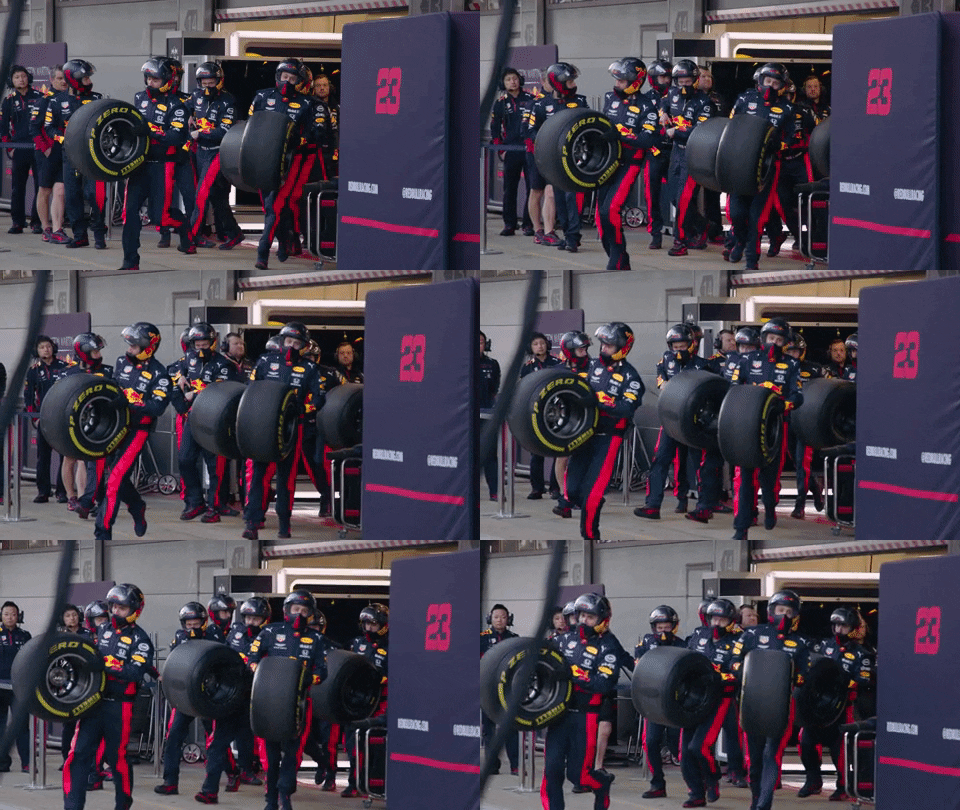
We tend to watch those pit stops and focus on speed.
And yes, the speed is extraordinary.
But James made an important distinction. The objective is not simply to achieve one record-breaking pit stop. It is to perform consistently, race after race.
That requires more than individual talent.
Every person must know their role. They must understand how their work connects to everyone else’s. And they must be able to anticipate what comes next.
They practice until coordination becomes dependable.
Now think about your own team.
Does everyone understand what success looks like?
Do people know who is responsible for each part of the work?
Can they anticipate what their colleagues need, or are they constantly waiting for clarification?
Because here is what I know.
A team full of talented individuals is not automatically a high-performing team.
If people are unclear about their roles, do not trust one another, or have never practiced working through pressure together, individual talent can only take them so far.
And that brings us to aviation.
In aviation, you do not wait for an emergency to start preparing.
I spent years in aviation leadership, so this part of the conversation was especially meaningful to me.
In aviation, preparation is not something you do when you have extra time.
It is part of the job.
Pilots train repeatedly. Crews use checklists and briefings. People rehearse how to respond to situations they hope never happen.
Why?
Because when the unexpected occurs, you do not want your team having its first conversation about what to do.
You want people who have practiced their responsibilities, understand how to communicate, and know how to work together.
James and I talked about the importance of a simple performance cycle:
Plan. Brief. Execute. Debrief.
Notice that last word.
Debrief.
How many teams finish a major project, celebrate or complain about the result, and immediately move on to the next assignment?
No real discussion about what worked.
No examination of what broke down.
No clear decision about what should change.
Then three months later, the same problems show up again.
Leaders, experience alone does not guarantee improvement.
We have to learn from the experience.
And that learning needs to happen before the next high-pressure moment.
Your team needs capacity, not just another assignment
James shared a useful way to think about high performance through three elements:
Capacity. Control. Coordination.
Capacity is having the physical, mental, and emotional resources to perform.
Control is being able to direct your attention and responses.
Coordination is the ability to work effectively with other people.
Now, I want you to think about your calendar.
And then think about your team’s calendar.
How many meetings are taking place because a leader wants an update, when a short written message would do?
How many people leave those meetings with another assignment but no uninterrupted time to complete it?
We talked about this in the episode because leaders sometimes create the very conditions that make performance harder.
We demand focus while interrupting people.
We expect thoughtful decisions while filling every available hour.
We ask for exceptional results while treating recovery like a luxury.
And then we wonder why everyone is exhausted.
James challenged that thinking by explaining the importance of recovery, including something as simple as five deliberate minutes away from your phone and your work.
That is not wasted time.
It is an opportunity to step away from constant demands and give your mind room to recover.
You cannot keep taking capacity from your team and expect performance to remain unchanged.
The leadership lesson: Prepare your people before the pressure arrives
Here is where I want to bring this back to you.
You may not lead a Formula 1 pit crew.
You may never be responsible for landing an aircraft.
Maybe you lead a sales team at a paper company. Maybe you manage a department with twelve people and a budget that keeps getting tighter.
The principles still apply.
You have people with different strengths, experiences, and ways of thinking. You have deadlines. You have unexpected problems. And you have moments when everyone is looking to you for direction.
So what are you doing before those moments arrive?
Are you creating clarity?
Are you helping people understand one another’s roles?
Are you giving them opportunities to practice, communicate honestly, and learn from mistakes?
Are you protecting enough capacity for them to do their best work?
Or are you relying on talented people to figure it out when things get difficult?
Because that is not a performance strategy.
That is a gamble.
High performance is not just about what your people can do. It is about whether your leadership helps them do it when it matters most.
For more on the neuroscience behind this, including James’s insights from Formula 1 and our conversation about aviation, watch my latest episode of Not Like Me.
Watch my conversation with Dr. James Hewitt
Want to put these leadership lessons into practice?
Understanding the neuroscience of high performance is one thing. Knowing how to lead people with different strengths, perspectives, and needs is another.
Grab this Free E.A.R.N. Leadership Field Guide
It gives you four practical leadership moves to help you better support your people and strengthen how your team works together.
Because high performance starts with intentional leadership.
Now ladies, this is just for you. I’ve got something else I want to invite you to.
Starting Monday, October 26, I’m hosting a free four-day challenge called Own the Moment.
During our last Be That Girl series, I heard from women who were leading teams, making important decisions, and carrying a lot of responsibility. But some of those same women shared how one difficult experience had changed the way they spoke up or advocated for themselves.
One woman told us she’d spent 13 years as a CFO and still felt she had to hold back parts of her personality and experience to preserve a professional relationship.
Those are the situations I want us to work through.
We’ll look at how past experiences affect our decisions, practice taking action in real situations, and get together LIVE on Thursday so I can help you work through some of the challenges you’re facing.
It’s free, and the daily activities only take a few minutes.
JOIN THE OWN THE MOMENT CHALLENGE
I’d love to have you with us!
Stephanie Chung
Your Ally in Leadership
Listen to this episode with a 7-day free trial
Subscribe to Your Ally in Leadership to listen to this post and get 7 days of free access to the full post archives.


