


Hey Leaders!!
I’ve been on the road quite a bit lately.
Over the last month, I spoke at a corporate event for AT&T, the Prosper Forum in California, and John Maxwell’s Live2Lead in Atlanta.
It’s been tiring, exhausting at times, but also incredibly rewarding.
I’ve been talking a lot about my E.A.R.N. Leadership System, and I thought I’d share some of that with you here, too.
There’s one part I want to get into today because you can take it straight into your next team meeting: alignment.
It sounds straightforward, right? You tell your team what needs to happen, everyone nods, and you get to work.
But how many times have you had good people working hard, only to find yourself asking, “Why are we having this conversation again?”
The deadline slipped. Two people worked on the same thing. Something you thought was the priority barely moved.
Before you ask your team for more effort, ask yourself:
Could everyone on your team explain what matters most, who owns what, and what a good result looks like?
And would their answers match?

Let’s Give You Something You Can Use
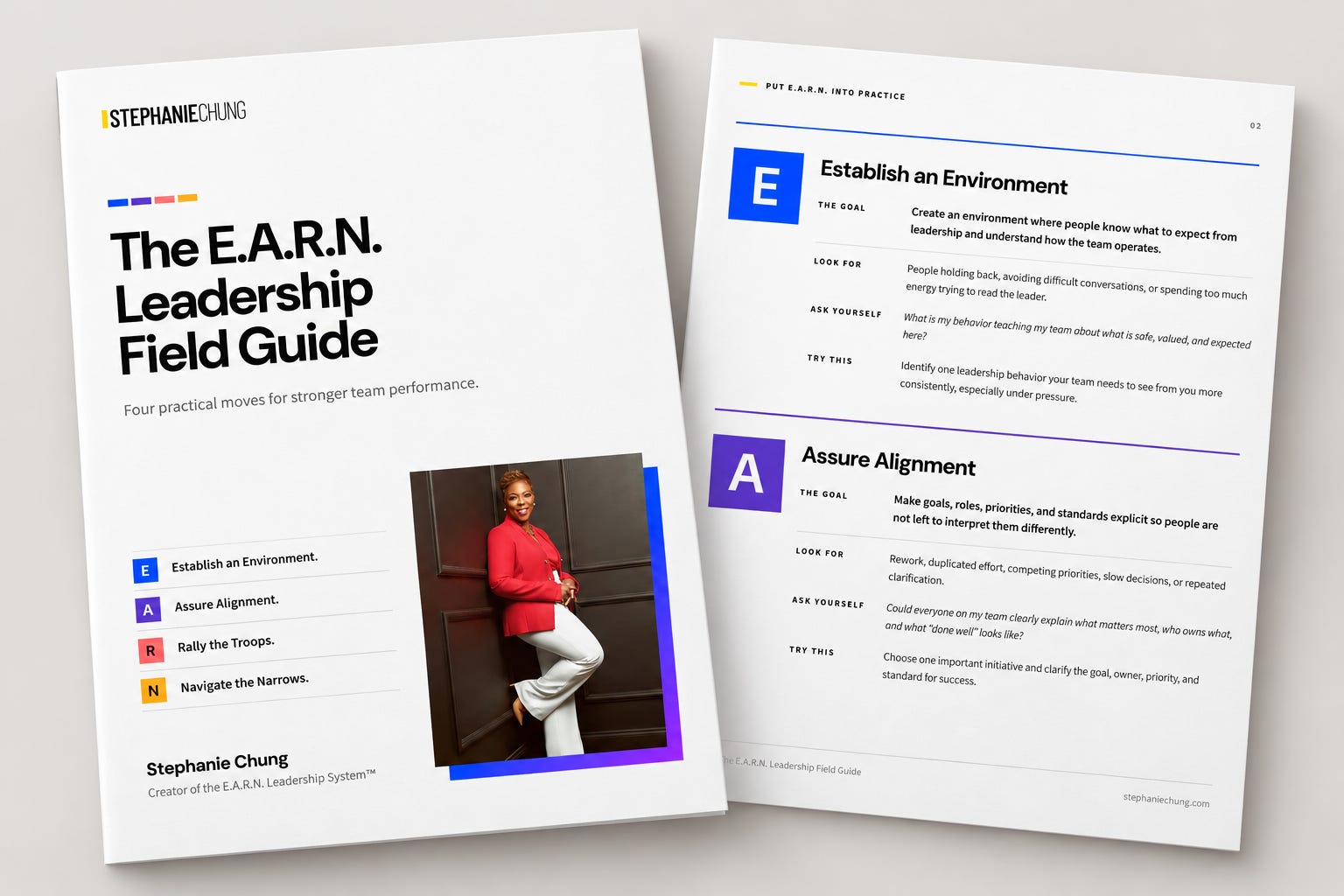
I put together the free E.A.R.N. Leadership Field Guide to help you take these ideas into the work you are already doing.
It walks through four practical moves:
Establish an Environment
Assure Alignment
Rally the Troops
Navigate the Narrows
Each includes signs to look for, a question to ask yourself, and an action to try with your team.
The A in E.A.R.N. stands for Assure Alignment.
When we leave the goal, priorities, or expectations unclear, we make our teams’ jobs harder.

You Said It. Did They Understand the Same Thing?
Imagine you wrap up a meeting by saying,
“We need to improve the customer experience this quarter.”
Everyone nods. You move on.
One person starts working on response times. Another wants to update the onboarding process. A third is waiting for someone to tell them which customer complaints to address first.
All three can reasonably believe they are doing what you asked.
Then you get frustrated because the work coming back does not look like what you had in mind.
Here is the question: How much of what you had in mind actually made it into the conversation?
Did you name the result?
Did you decide who was responsible?
Did you explain which work should take priority when other requests came in?
Or did you leave your team to figure those things out?
As leaders, we have context our teams may not have. We know what happened in the executive meeting. We know which customer relationship is at risk. We know why one deadline suddenly matters more than another.
Your team needs enough of that context to make good decisions.
Your team should never have to guess what you will consider a good result.

Four Things to Clarify Before the Work Begins
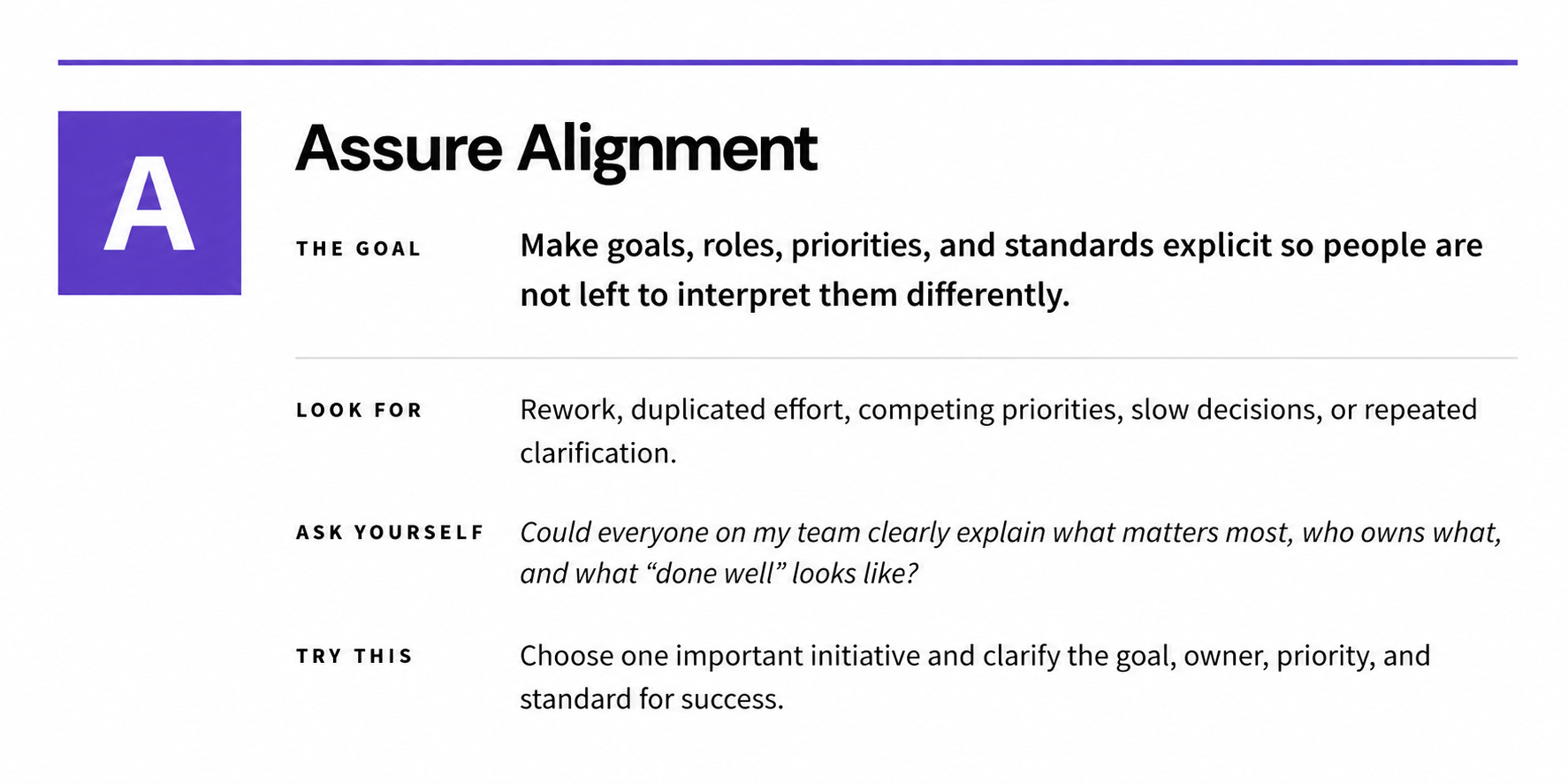
The field guide asks you to choose one important initiative and clarify its goal, owner, priority, and standard for success.
Let’s make that practical.
1. What are we trying to accomplish?
“Improve the customer experience” gives people a direction. It still leaves a lot open to interpretation.
Which part of the experience? For which customers? What change are we trying to make, and by when?
You should be able to explain the result clearly enough that someone can use it to decide what to work on.
2. Who owns it?
Who is responsible for moving the work forward? Who needs to contribute? Who makes the decision when the team gets stuck?
If three people believe someone else is handling the next step, you have a problem before the work even starts.
3. Where does this sit among our priorities?
Your team already has work to do.
When you add an initiative, explain how it fits. If it comes first, what can wait? If everything cannot get done, what tradeoff should they make, and when should they bring that decision to you?
That is a leadership conversation.
4. What does “done well” look like?
Be specific about what you will evaluate.
Does success mean faster responses? Fewer errors? A customer being able to complete a process without calling for help?
Give your team a standard they can work toward. They should hear it before they turn in the work.
Your Leadership Challenge This Week
Choose one initiative that is already underway.
Before your next meeting, write down your answers to these four questions:
What result are we working toward?
Who owns moving it forward?
Where does it sit among our current priorities?
What will tell us we have done it well?
Then ask the people doing the work to answer those same questions independently, before you share your answers.
Compare what everyone wrote.
If the answers differ, get curious. Ask, “What led you to understand it that way?”
You may discover an instruction that was too broad, a decision that never reached the team, or two priorities that compete with each other.
Use that conversation to agree on the four answers. Write them down somewhere the team can refer to, and decide when you will check progress.
Do this before you ask people to work harder.
What If Alignment Is Not the Problem?
That is why the field guide includes all four parts of E.A.R.N.
If people are holding back or avoiding hard conversations, look at the environment you are establishing.
If they understand the work but ownership and energy are slipping, look at how you are rallying the team around why it matters.
If you are seeing hesitation, pushback, or missed commitments during change, look at how you are navigating the pressure and what you still need to understand.
Start with the friction you can actually see. Then choose a leadership action that addresses it.
Start With One Conversation
You do not need to turn this into another big project.
Start with one initiative and one conversation. Find out whether your team’s understanding matches yours, and clear up what does not.
The free E.A.R.N. Leadership Field Guide gives you a place to start with each of the four areas.
Which creates the most confusion on your team: the goal, the owner, the priority, or the standard for success?
Tell me in the comments.
Your Ally,
Stephanie
Read Ally Leadership
A practical guide to leading people who are not like you and building stronger, more effective teams.
Learn With Stephanie
Go deeper with leadership courses designed to help you strengthen how you communicate, influence, and lead.
Bring Stephanie to Your Organization
Book Stephanie for keynote speaking, leadership training, or programs built for teams and organizations.